[Title, because I guess WordPress won’t let me use the page as a link?]
Track 1: The Art of Forgetting
Yeah, so, just in case the Bluesky post didn’t make it clear, I stole borrowed alluded to everything here.
Oddly enough, I don’t think I explicitly alluded to Jonathan Lethem’s “The Ecstasy of Influence”, although, I mean, c’mon, yeah… duh.
FORMAT: Max Gladstone mentioned how poetic forms such as kishōtenketsu and qǐchéngzhuǎnhé (起承轉合) could be used as inspirations, being (more or less, for both) distinct in character from yet still (relatively) isomorphic to traditional Western narrative structures (three-act, Freytag, 7-point, etc.) So… less an allusion, but still what led to rabbitholing Wikipedia for various poetic forms (I was “supposed” to be rabbitholing Wikipedia in preparation for The Horror That Was Thursday, but happened upon the page for villanelles and remembered Max’s talk and, welp…), reading through bunches of villanelles, and eventually thinking “y’know, squint a bit and this Plath poem could have a cyborg in it”. To quote Philip K. Jason’s “Modern Versions of the Villanelle“, the “villanelle is often used, and properly used, to deal with one or another degree of obsession”, while Stephen Fry (in 2007’s The Ode Less Travelled) remarks on its “playful artifice” and how it suits “outsiders, or those who might have cause to consider themselves as such”, as well as “rueful, ironic reiteration of pain or fatalism”. [Memory-modification-wise, I was also inspired by my not-at-all-what-was-intended reading of the square-bracketed bits in a different jellyfish’s workshop story.]
(The formal shenanigans / stunt-pilotry also helped keep it from hewing too closely to Eternal Sunshine of the Spotless Mind, which I remembered existed thankfully late enough so’s not to go prompt-critical in junking this. At the risk of having to tap my McKee sign1 on myself, this is different and actually aimed more2 towards Star Trek: The Next Generation S05E02 “Darmok”.)
TITLE: The title is lifted, jointly, from Giordano Bruno’s 1582 Ars memoriae, Frances A. Yates’s 1966 The Art of Memory (itself presumably in reference to Bruno’s work), and Elizabeth Bishop’s 1976 “One Art” and its opening words “The art of losing”.
“I shut my eyes”, as well as “I still have you here” (and their variations) are lifted (as is the overall structure and, you know, the whole “I think I made you up inside my head” thing, i.e. the entire precis of the piece) from the refrains of Sylvia Plath’s 1953 “Mad Girl’s Love Song”. (“moon-struck” comes from the same poem, third tercet.)
“memX” is drawn from Vannevar Bush’s 1945 “As We May Think” and its introduction of the “memory” + “index” = “memex”. Dropped the second ‘e’ & capitalized the ‘X’ because <waves hands at tech naming conventions> and because –
“A blind man” is a reference to & near-direct quote from Jorge Luis Borges’s 1942 “Funes el memorioso” / “Funes the Memorious”, although a similar line (“In the practical use of our intellect, forgetting is as important a function as recollecting.”) appears in William James’s 1890 The Principles of Psychology.
“dark was right” tags in Dylan Thomas’s 1951 “Do not go gentle into that good night”, while “last the night” is from Edna St. Vincent Millay’s 1920 “First Fig”. (Not that the latter allusion really, uh, does anything with the reference, and in fact undercuts things because… well, both Borges and James3 were sorta supernovae in their fields with not-exactly-‘short’ careers, but… Dark! Right! Candle! Light!  .)
.)
“sun and earth” references Aristophanes’s speech in the Symposium of Plato.
“moments of perfection” was very loosely (as in, I saw ‘moment’ and ‘perfection’ and had to flip through my notebook to confirm) inspired by Chuck Palahniuk’s 1996 Fight Club: “[…] a person had to work hard for it, but a minute of perfection was worth the effort. A moment was the most you could ever expect from perfection.”
“A rapier pins” opens an entire paragraph that’s paraphrasing the description of Sehnsucht from the preface to C.S. Lewis’s 1933 The Pilgrim’s Regress (tho’ the introduction was only added starting with the 3rd edition; also note that Lewis explicitly cites the poem “Kubla Khan” there).
“quite insane” is also from Plath, while “honey-dewed” comes from the last two lines of Samuel Taylor Coleridge’s 1797 “Kubla Khan”. (I’m also going to say that the closely-spaced repetition of “honey” is an allusion to the style of W.B. Yeats, as seen in “Aedh Wishes for the Cloths of Heaven” (1899), “An Irish Airman Foresees His Death” (1919), and “The Second Coming” (1920)4. Not an oversight in composition. Yeah…)
“I lose another hour” is loosely lifted from Alfred, Lord Tennyson’s 1850 “In Memoriam A.H.H.”.
“ivory gates” come from Book 19 of the Odyssey, as part of the ancient Greek play on words around “gates of horn [fulfill] and ivory [deceive]” although the pun’s really only present in the original Greek.
“like a fortune” is, of course, originally from Ernest Hemingway’s 1926 The Sun Also Rises, but the precise wording of the juxtaposition appears in John Green’s 2012 The Fault in Our Stars. (Can’t recall if I stumbled across the quote somewhere else and suffered cryptomnesia since, or if it was an independent reformulation, as I’ve not read that book yet.)
“If I had known” is from W.H. Auden’s 1940 “If I Could Tell You”. (Other very loose variations appear throughout; this is the most direct lifting / usage.)
“lost keys” also references Bishop: “[…] Accept the fluster // of lost door keys, the hour badly spent.” Numerous other faint echoes of Bishop throughout, naturally.
“bay’s green swells” kicks off a rather mangled mash-up of some imagery plucked from Thomas.
“beside your side” isn’t really an allusion, but it is somewhat reassuring me that maybe the earlier “honey”/”honey” thing actually was on purpose5, and that the Yeats bit wasn’t just mad scrambling for an excuseplanation?
(Not counting “impossible to tell” as an allusion because a) it’s not really used as a reference to the Pinsky poem in any way, and b) I, uh, have not read the Pinsky poem, although I have seen S13E20 of The Simpsons, “Little Girl in the Big Ten”…)
“girl sing the blues” is technically just the first level of a dual allusion, to Don McLean’s 1971 “American Pie”. The second part, though, is probably too esoteric to count as an allusion. More of an in-joke.
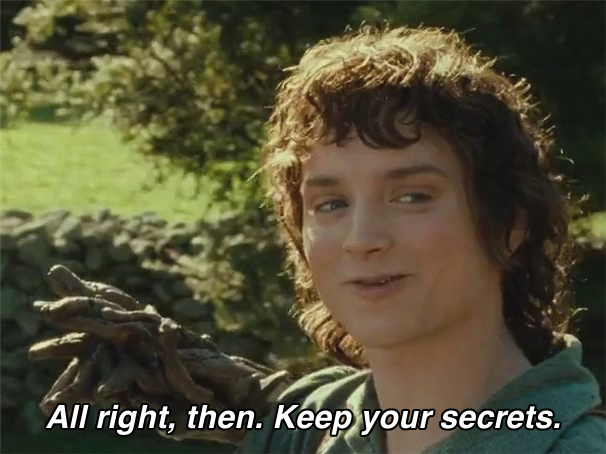
- Right! I haven’t posted the McKee sign yet. Also haven’t hit Publish on the post announcing liner notes either. ↩︎
- Look, it’s about whatever the reader thinks it’s about, etc., and it doesn’t really matter to whatever’s hit where the bullet was aimed, but that aim’s still the difference between murder and manslaughter so… perhaps this is a less-than-ideally exculpatory analogy. ↩︎
- Both Jameses, really, though referring here to Willy-J. ↩︎
- And probably others? Those are just the ones off the top of my head. ↩︎
- Look, short fiction generally has a long lead time, and since one of the main motivators to submitting such things is that as soon as they’ve sold I can go THANK CHRIST I NEVER NEED TO LOOK AT OR THINK ABOUT THIS AGAIN (
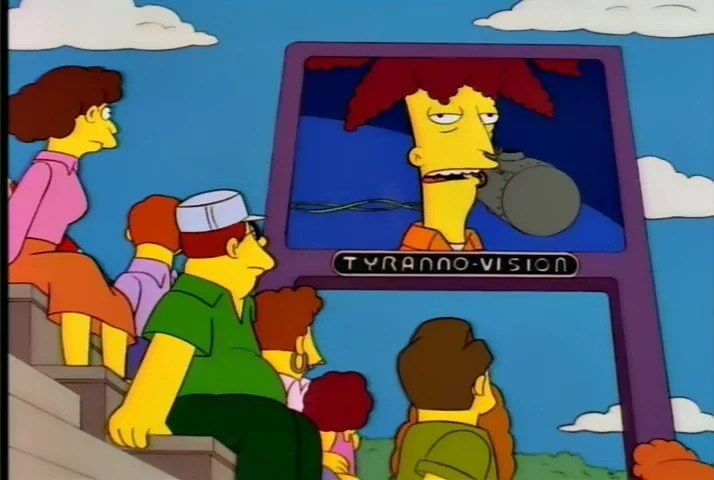 ), it’s been… a while since this was written (as in… however long it’s been since late November of ’24?) and also since I last looked at it. ↩︎
 - As in, as of this writing it’s not on the Wikipedia page. [Original mention of joint allusion struck because ‘twould be too googleable with the both of them.] ↩︎
Track 2: The Rocksitter’s Creed
[TBD]
Track 3: The Case of the Vanishing Pennyweight
[TBD]


